ORQEST
AI Workflow Studio
Orchestrate smarter.
Company Portfolio · 2026
www.orqest.site · Amman, Jordan
Business idea
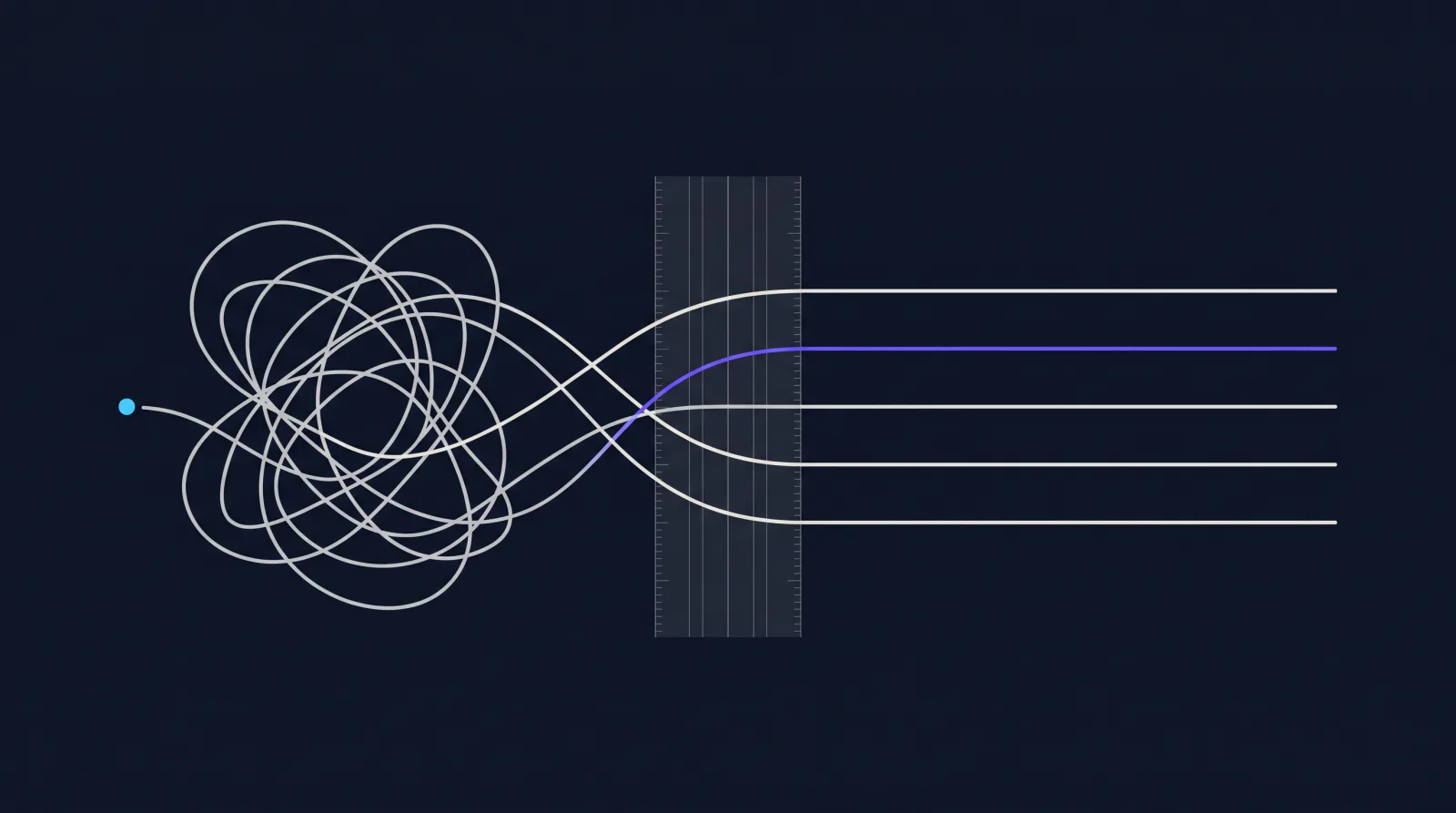
Small businesses don't have a software problem. They have an orchestration problem.
Businesses run on tools that don't talk to each other. Inquiries wait in inboxes, the same data is typed into three systems, approvals stall, documents fragment across drives, and follow-ups depend on memory. Every gap between tools is paid for in staff hours — and in Jordan, where SMEs are ~98% of businesses, few can hire dedicated operations or IT staff to close those gaps.
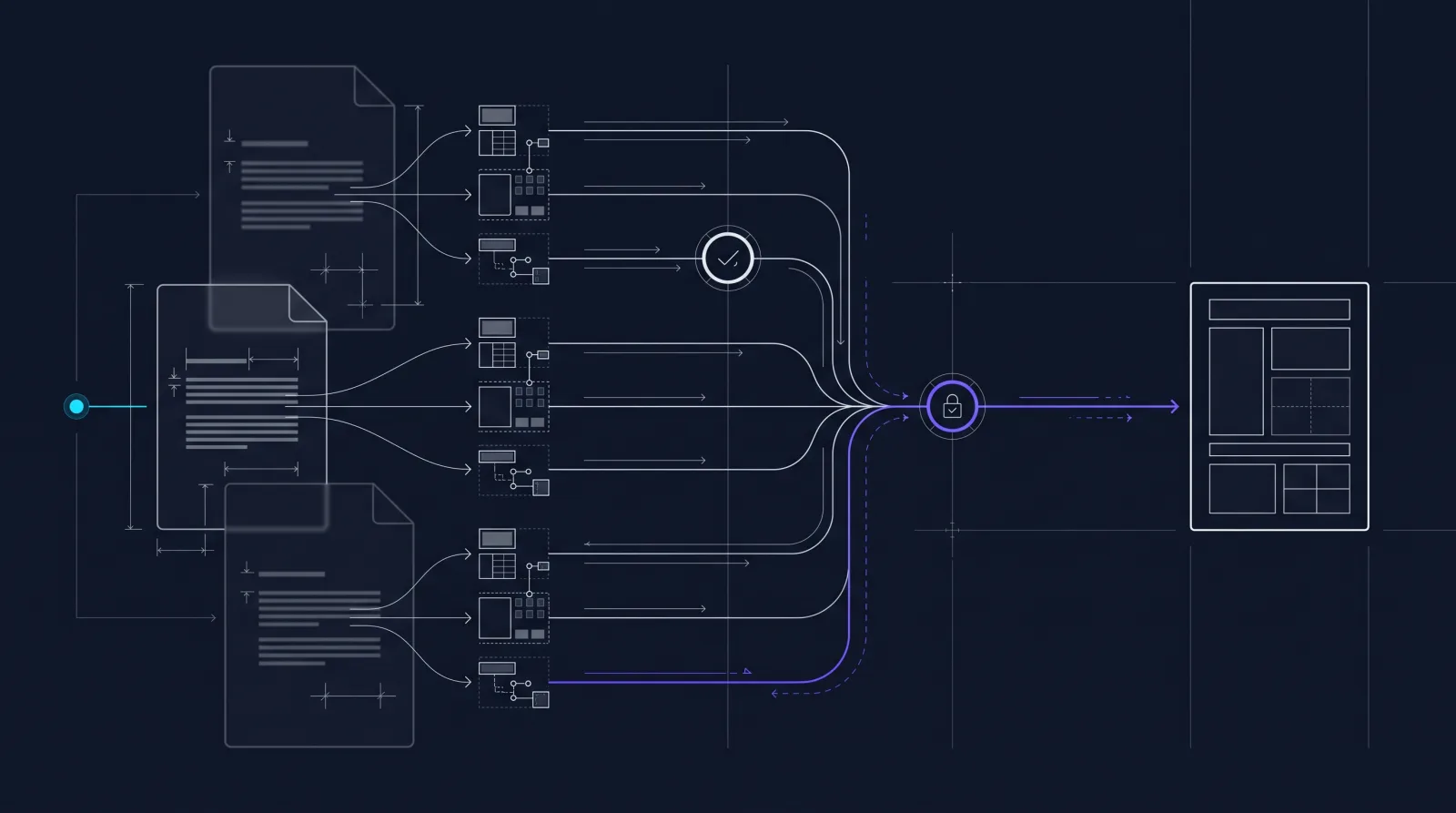
ORQEST designs, builds and maintains AI-powered workflows on top of the tools a business already uses: connecting systems, automating repetitive steps, using AI to read and route business information, and preserving human approval where judgment matters. The deliverable is a working, monitored workflow — not a report and not a software licence.
ORQEST does not require the customer to replace anything. Your tools already work — we make them work together. Combined with a named six-stage method, explicit human approval gates, engineering-domain fluency, and a managed retainer that answers "who maintains this?", that is a position generic AI agencies and enterprise integrators both leave open.
Primary: engineering and technical companies — consultancies, MEP firms, contractors, industrial and maintenance organisations.
Secondary: process-heavy SMEs — clinics, professional offices, e-commerce sellers, service providers.
Company overview
AI workflow automation and business-process services (B2B).
Workflow discovery · AI workflow automation · document intelligence · engineering workflow packages · sales & CRM automation · managed optimization.
Amman, Jordan. Serving Jordan first; engineering packages designed to travel to the Gulf.
Developing studio in its foundation year — presented honestly as such throughout this portfolio.
ORQEST began with a mechanical-engineering student watching how real offices in Jordan operate: an RFQ arrives by email, someone retypes it into a spreadsheet, someone else copies it into a quotation template, a manager approves it verbally, and the follow-up depends on somebody remembering. Every tool in that chain worked; the chain didn't. AI made the connective layer affordable for the first time — ORQEST exists to build it. The name comes from orchestrate: a conductor doesn't play the instruments, but makes independent parts produce one coherent result.
Vision & mission
A future where important work moves seamlessly through organisations instead of being trapped between disconnected tools and manual processes.
Design intelligent workflows that connect people, tools, information and actions — so businesses operate with less friction and greater clarity.
Core values
Six working rules — each one tells the team what to do when a decision is unclear.
Clarity
Every workflow must be explainable to its owner in one diagram and five minutes — or it isn't finished.
Reliability
Automation that fails silently is worse than the manual process it replaced. Error handling, alerting and a human fallback ship before go-live.
Human-centered intelligence
AI supports professional judgment; it never replaces it. Decisions, calculations and sign-off stay human.
Integration
We connect what exists first. Replacement is a last resort, not a sales strategy.
Accountability
Every workflow has a named owner on both sides and a measurable outcome reviewed on schedule.
Continuous improvement
Workflows are living systems. Optimize is a permanent stage, not a project phase.
Business model
ORQEST is a service-led B2B studio — deliberately not SaaS. There is no platform to build before earning: revenue comes from paid analysis, paid implementation, and recurring managed support, and every project deepens a reusable workflow library that raises margin over time.
The customer journey that generates income:
- Discovery
- Workflow audit (paid)
- Proposal
- Design
- Implementation (paid)
- Deployment
- Support & optimization (recurring)
Audit fees open engagements; project fees on implementations and engineering packages are the profit engine; monthly retainers smooth income between projects.
Built on proven integration tooling and LLM APIs — near-zero fixed costs; AI/API operating costs passed through in retainers at cost plus handling.
Repeated custom work becomes packaged workflows sold at ~30% below custom price with better margin — scaling revenue without scaling headcount first.
SMART goals
Six goals over the six-month development horizon. Each is Specific, Measurable, Achievable, Relevant and Time-bound — and each is a target, not an achievement.
| # | Goal | Measure | Deadline |
|---|---|---|---|
| G1 | Complete brand, 12-page website, portfolio and six-service architecture | All four artefacts finished and reviewed | End of Month 1 |
| G2 | Hold 20 qualified discovery conversations (≥8 with engineering/technical firms) | Logged conversation count | End of Month 3 |
| G3 | Build 3 working workflow prototypes (RFQ→Quotation, document intake, lead follow-up) | Each runs end-to-end on sample data | End of Month 3 |
| G4 | Secure 2 pilot engagements, at least one with an engineering firm | Signed pilot scope documents | End of Month 5 |
| G5 | Convert ≥1 pilot into a paid implementation (JOD 1,500–4,000 initial value) | Signed contract + invoice | End of Month 6 |
| G6 | Establish ≥1 recurring managed-optimization retainer (JOD 150–400/month) | Active monthly agreement | End of Month 6 |
Dependency acknowledged: G5 and G6 depend on G4, which is why G4 is set a month earlier. If G4 slips, G5–G6 shift with it.
Products & services
Six services covering one spine: understand the workflow → build the automation → keep it working. Each is listed with its description, benefits and deliverables.
Description: 1–3 day analysis of people, tools, information, handoffs, bottlenecks and repetition.
Benefits: decision-grade clarity on where hours leak — valuable even if nothing is automated.
Deliverables: current-state workflow · bottleneck map · automation opportunity matrix · future-state workflow · implementation roadmap.
Description: custom automations across inquiry handling, approvals, data flows and follow-ups, built on existing tools.
Benefits: hours returned weekly; nothing forgotten; consistent process on busy days.
Deliverables: production workflow · integrations · documentation · monitoring · training · human fallback path.
Description: AI pipeline that extracts, classifies, summarises, validates, routes and stores business documents, then triggers the next step.
Benefits: no retyping from attachments; consistent filing; documents that start work instead of waiting for it.
Deliverables: extraction pipeline · classification rules · validation checks · routing map · human-review queue.
Description: five packaged engineering workflows adapted per firm: RFQ→Quotation, technical document control, procurement, maintenance, project reporting.
Benefits: faster RFQ response, controlled revisions, procurement without chase-emails, self-assembling reports.
Deliverables: deployed package · approval-gate configuration · integrations · training · monitoring.
Description: lead capture → qualification → CRM sync → quotation initiation → follow-up sequences → pipeline visibility.
Benefits: no lead falls through; owners always know their pipeline.
Deliverables: connected capture channels · CRM configuration · follow-up automation · pipeline dashboard.
Description: monthly retainer: monitoring, maintenance, prompt/rule tuning, new integrations, performance reporting.
Benefits: automation you can rely on without hiring for it; workflows that improve instead of rotting.
Deliverables: SLA support · monitoring dashboard · monthly report · improvement backlog · change log.
Thinking method — the ORQEST framework
Design thinking adapted to workflow engineering: three stages of understanding and deciding, three of building and sustaining. Applied to client work and to ORQEST itself.
Understand users, systems, tools, constraints, information and the current workflow. No solutions proposed yet — discovery that arrives with a solution is sales, not discovery.
Isolate the real bottleneck behind the symptom; fix the success measures as numbers (response time, hours/week, error rate); record what will NOT be automated.
Future-state workflow on paper first: logic, integrations, information movement, safeguards — and human approval gates drawn explicitly.
Build the integrations, automation steps, AI components and data flows on proven tooling; working on test data before real data.
Edge-case testing, team training, a short parallel run, then cutover — monitoring and alerting on before go-live, rollback plan written down.
Measure against the DEFINE metrics, catch drift, extend as the business changes. Permanent — the basis of the managed retainer.
Action plan
Phase 1 — Setup (Months 1–2)
Branding: Orchestrated Q identity, usage rules, colour and type system — complete. Website: 12-page site across home, services, engineering, method, portfolio and contact — complete. Portfolio creation: this document, print-ready. Plus positioning lock, discovery-interview script and demo storyboards.
Phase 2 — Launch (Months 2–4)
Marketing: LinkedIn presence, two workflow-teardown posts monthly, SEO on service pages. First customers: 20 discovery conversations, free audits for the five best fits, two signed pilots. Partnerships: referral proposals to three complementary providers (IT support firms, ERP resellers, engineering software vendors). Three working prototypes built.
Phase 3 — Growth (Months 4–6+)
Expand services: pilots packaged into the reusable engineering workflow library. Hire team: first hire (implementation engineer) triggered by more than two concurrent paid projects — a documented trigger, not a guess. Scale revenue: ≥1 paid implementation and ≥1 recurring retainer; Month-6 review kills offers with no demand and doubles down on what earned revenue; Gulf outreach planned for engineering packages.
Brand identity
The Orchestrated Q: three disconnected inputs approach one coordinated system; one organised output exits. The logo explains the service before a word is read.
Colour palette — and why these colours
An entirely-cool analogous palette: a brand promising to reduce chaos cannot present a chaotic palette. Hierarchy is carried by value (navy↔off-white measures 17.81:1 on the WCAG formula), so the identity survives greyscale printing and colour-blind vision unchanged.
Typography & design system
Sora for display — its near-circular O rhymes with the ring in the symbol. Inter for body and small text — engineered for small-size readability. Theme: Minimal Geometric — controlled geometry, one stroke weight, generous space, asymmetric balance; no AI clichés, no literal music imagery. Full system: logo guidelines, colour tokens, motif grammar and usage rules maintained as a documented design system.
Website strategy
The site is the company's proof of competence: if ORQEST's own digital presence were chaotic, nothing else would be believed. Structure follows the brief's required pages — Home, About, Services, Portfolio, Contact — extended with the engineering specialisation.
Home · About · Services (overview + 5 service pages) · Industries/Engineering · Method · Portfolio (this document) · Contact. No empty routes; every page ends at one CTA: Request a Workflow Audit.
Hand-authored static HTML/CSS/JS — zero dependencies, instant loading, print-ready portfolio, hostable anywhere (GitHub Pages, Netlify). A documented migration path to Next.js exists for when server-side needs become real.
Benefit first, technical detail second (progressive disclosure); concrete example chains instead of abstract claims; the first ask is always the low-commitment audit. No fake urgency, counters or testimonials.
Market analysis
Researched from live sources; ranges reported where research firms disagree. Full citations in the research annex (research/market-analysis.md).
The global workflow-automation market is estimated at USD 26–30 billion in 2026, with forecast growth of ~9–16.6% CAGR to 2031–2034 (Mordor Intelligence, Fortune Business Insights, SkyQuest, Coherent MI). Intelligent document processing — the engine behind ORQEST's Document Intelligence service — clusters around USD 3.2–4.4 billion in 2026 growing at 26–34% CAGR (Grand View Research and others): the fastest-growing capability ORQEST sells.
SMEs are ~98% of registered businesses, employ over 60% of the private-sector workforce and generate ~40% of GDP (trade.gov Country Commercial Guide; IIETA). Research on Jordanian SMEs finds digital transformation raises competitiveness but adoption is blocked by limited ICT skills — the constraint is implementation capacity, which is exactly what a service studio sells. No credible public figure exists for "AI workflow services revenue, Jordan"; that gap is stated rather than filled with an invented number.
Six categories: automation platforms (Zapier/Make/n8n — sell tools, not outcomes) · generic AI agencies (no engineering fluency) · enterprise systems integrators (priced above SMEs) · ERP/CRM consultants (push replacement) · engineering software vendors (products, not process) · freelancers (no method, no maintenance). ORQEST's quadrant — custom implementation × engineering specialisation at SME scale — is the least occupied locally.
The implementation gap between cheap capable platforms and SMEs who can't deploy them · nearly uncontested engineering back-office niche · document-intelligence growth mapping onto engineering document burden · bilingual local presence vs. remote foreign agencies · retainers converting maintenance fear into recurring revenue.
Revenue streams
Six streams. For each: the source of revenue, the value added, the proposed pricing of that value, and the target customer segment. All pricing is proposed — ORQEST has no trading history and claims none.
| Source of revenue | Value added | Proposed pricing | Target segment |
|---|---|---|---|
| 1 · Workflow discovery / audit fee | Documented map of how the business runs, bottlenecks costed, automation roadmap — valuable even without implementation | Fixed JOD 150–400 by company size (free for pilot-phase prospects); priced on 1–3 analysis days | Any SME with repetitive admin — entry product for every other stream |
| 2 · Custom workflow implementation (primary) | A working automation in their real tools: repetitive steps removed, human gates preserved, measured in hours returned weekly | Project fee JOD 900–4,000 per workflow: integrations × steps × AI components + testing/training; quoted only after audit | Small businesses, clinics, offices, e-commerce, service providers |
| 3 · Engineering workflow packages | Proven workflow patterns (RFQ, document control, procurement, maintenance) adapted per firm — faster and cheaper than fully custom | JOD 1,500–5,000 by package and integration count; ~30% under equivalent custom scope | Engineering consultancies, MEP firms, contractors, industrial and maintenance organisations |
| 4 · Managed automation retainer (recurring) | Workflows keep working: monitoring, maintenance, tuning, small changes, monthly report — removes the "who maintains this?" barrier | JOD 150–400/month tiered by active workflows and support hours; AI/API costs passed through at cost + handling | Every implementation client; the sustainability engine |
| 5 · Custom integration work | Connections between systems that don't natively talk (ERP↔CRM, legacy tools, portals) | JOD 120–200/day or fixed-scope per connector | Firms with established software stacks, typically engineering/industrial |
| 6 · Training & enablement | The client's own team can operate and extend their workflows — reduces dependence, increases trust | JOD 80–150 per half-day session; bundled free into larger implementations | Existing clients; engineering offices with IT-capable staff |
Pricing basis everywhere: workflow complexity, integration count, implementation hours, AI/API operating cost, and support requirement — never invented market rates.
Growth strategy
Teach, don't shout: workflow-teardown content on LinkedIn, SEO on honest service pages, demonstrations instead of claimed case studies — until earned results replace them.
Referral relationships with IT support firms, ERP/CRM resellers and engineering software vendors — providers who see the workflow pain daily but don't build automations.
Every project feeds a reusable workflow library; repeated custom work becomes packaged offers with better margin. Tooling stays boring and proven — differentiation lives in method and domain, not a proprietary platform.
Amman → Jordan → Gulf, led by the engineering packages (English-documented, high engineering activity). First hire triggered by demand evidence (>2 concurrent paid projects), never by optimism.
Contact & call to action
Let's orchestrate the work
behind your business.
If a process depends on repeated manual handoffs, disconnected tools, or information trapped between systems, ORQEST can map it and design a clearer workflow. The first step is a workflow audit — and you keep the map either way.
Request a workflow audit at orqest.site/contact — we reply within two working days.
Amman, Jordan — working across Jordan and the Gulf.